
Audi A5
Audi A5 Engine CC Details: The Ultimate Performance and Displacement Guide
Carlist 360
17 June 2026
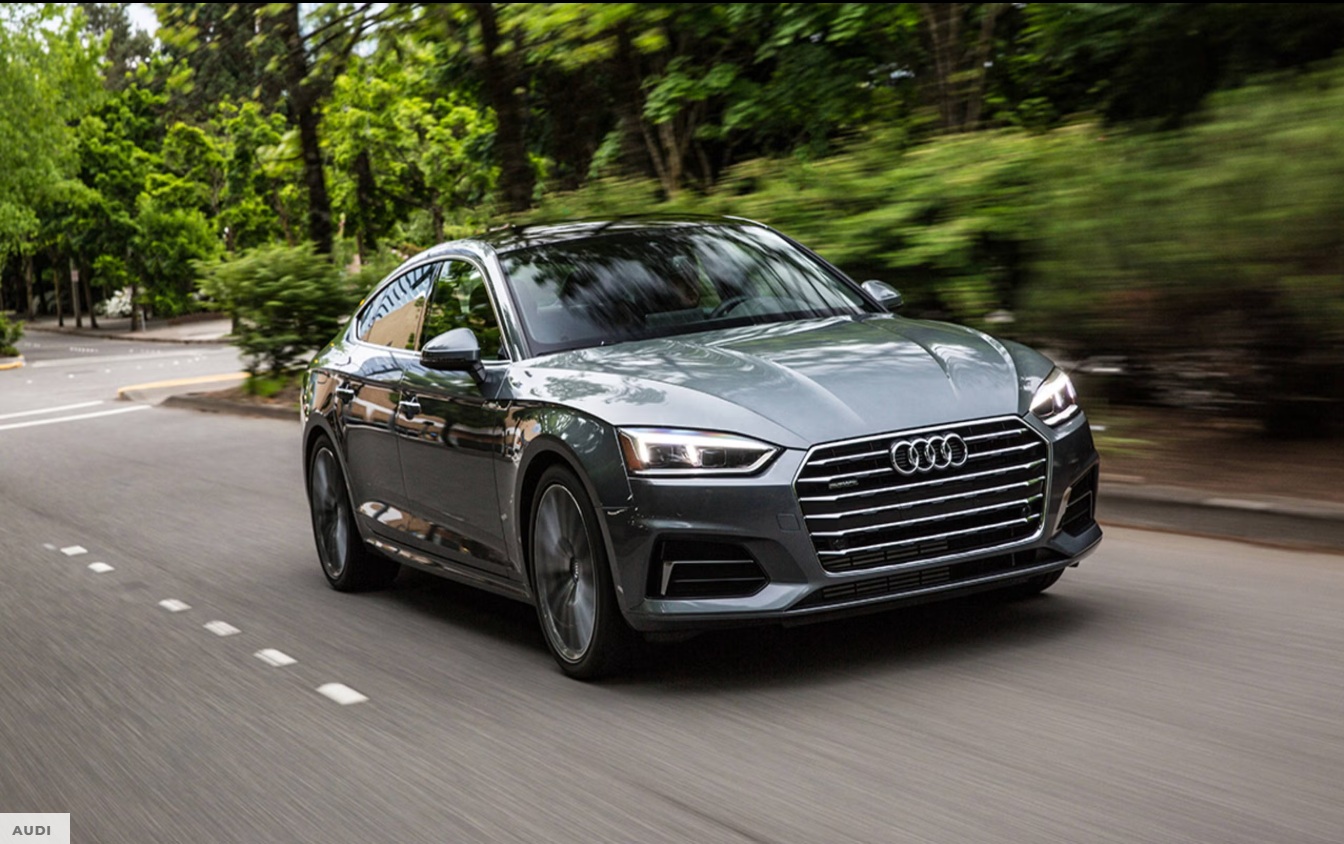
When evaluating a premium luxury vehicle, the heart of its performance lies completely within its powertrain configuration. Understanding the specific Audi A5 engine cc details is crucial for drivers who want to balance smooth executive cruising with athletic acceleration. The term "cc" refers to cubic centimeters, which measures the total cylinder displacement of the engine, directly impacting the car's power output, fuel efficiency, and overall driving dynamics.
Audi has carefully engineered its powertrain lineup to offer a diverse range of displacements depending on the specific model year, trim level, and regional market. From efficient turbocharged four-cylinder units to high-performance, track-ready powerplants, the entire range utilizes advanced forced induction and fuel injection technologies. This comprehensive guide breaks down the core technical metrics, displacement variations, and engineering highlights, ensuring you have a complete understanding of the Audi A5 engine cc details before purchasing your next luxury vehicle.
The Baseline Foundation of Audi A5 Engine CC Details
At the core of the standard Audi A5 lineup is a highly versatile, turbocharged four-cylinder engine block that balances daily usability with responsive power. When analyzing the entry-level Audi A5 engine cc details, the exact displacement is registered at 1,984 cc (frequently rounded up and marketed worldwide as a 2.0-liter engine).
This 1,984 cc engine architecture features an inline-4 cylinder layout with a cast-iron block and an aluminum alloy cylinder head for optimized thermal management. By leveraging a total cylinder displacement of 1,984 cc, Audi engineers can implement a highly sophisticated twin-scroll turbocharging system. This specific setup ensures that exhaust gases are channeled efficiently, completely eliminating turbo lag and providing robust torque from incredibly low RPM ranges.
Power Profiles Associated with the 1,984 cc Audi A5 Engine CC Details
The standard 1,984 cc displacement engine is not limited to a single performance tuning spec. Audi modifies the electronic mapping and boost parameters of this specific engine to create distinct power tiers across the lineup. For instance, entry-level front-wheel-drive configurations use the 1,984 cc engine to produce a balanced output focused primarily on maximizing highway fuel economy.
Conversely, upgrading to the premium quattro all-wheel-drive models unlocks the full performance potential of the 1,984 cc powertrain. In these higher trims, the identical 1,984 cc cylinder configuration is optimized to deliver up to 268 horsepower and 295 lb-ft of torque. This demonstrates how a fixed internal displacement can be dynamically adapted to meet different performance expectations without requiring a heavier engine block.
Historical Diesel Variations Within the Audi A5 Engine CC Details
In various international markets, particularly across Europe and India, diesel propulsion has played a massive role in the brand's long-distance touring legacy. Reviewing the diesel-powered Audi A5 engine cc details reveals a highly efficient 1,968 cc common-rail injection engine, widely classified across dealerships as the 2.0 TDI or 35/40 TDI variants.
Featuring a total displacement of 1,968 cc, this specific four-cylinder diesel engine is meticulously tuned to prioritize low-end pulling power and long-range highway mileage. It typically generates roughly 188 to 204 horsepower while pumping out a massive wave of torque starting at just 1,750 RPM. This 1,968 cc footprint remains a favorite for corporate commuters who require a luxury car capable of covering vast distances with minimal fuel stops.
Upgrading to the High-Performance S5 Model Audi A5 Engine CC Details
For automotive enthusiasts who demand a more exhilarating driving experience, the standard four-cylinder configurations can be stepped up in favor of the performance-oriented Audi S5 variant. When examining the S5 tier's Audi A5 engine cc details, the displacement jumps significantly to a robust 2,995 cc (marketed as a 3.0-liter engine).
This 2,995 cc powerplant transitions from an inline design to a highly rigid V6 cylinder architecture. The extra displacement provided by the 2,995 cc block allows the engine to easily breathe in more air and fuel, resulting in a staggering power output of up to 362 horsepower. This V6 unit utilizes a single twin-scroll turbocharger mounted directly within the 90-degree "V" of the cylinder banks, shortening the exhaust gas paths for immediate throttle response.
Unleashing the Ultimate Track-Ready RS5 Audi A5 Engine CC Details
At the absolute pinnacle of the vehicle's engineering hierarchy sits the ultra-high-performance Audi RS5. Looking closely at the top-tier Audi A5 engine cc details, the RS5 model introduces a specialized twin-turbocharged V6 engine that features a total displacement of 2,894 cc (marketed as a 2.9-liter engine).
While the 2,894 cc size is slightly smaller in absolute volume than the S5’s V6 engine, the internal components are heavily reinforced to withstand massive amounts of boost pressure. By combining a 2,894 cc displacement with two dedicated turbochargers operating in parallel, this monstrous engine generates over 444 horsepower and 443 lb-ft of torque. It showcases how Audi uses a slightly downsized displacement to reduce rotating mass while relying on heavy turbocharging to achieve supercar-level acceleration.
How Mild-Hybrid Integration Enhances the Audi A5 Engine CC Details
Modern automotive design requires a balance of internal combustion power with specialized electrical assistance. Across recent generations, the standard 1,984 cc and 1,968 cc platforms have integrated a standard 48-volt or 12-volt mild-hybrid electric vehicle (MHEV) system directly into the core Audi A5 engine cc details.
This engineering integration does not change the physical cylinder displacement of 1,984 cc, but it dramatically changes how that displacement performs. A belt-alternator starter recovers kinetic energy during braking and stores it in a compact lithium-ion battery. This electricity is then used to seamlessly smooth out the automatic engine start-stop cycles and allow the vehicle to coast with the combustion engine entirely shut off at highway speeds, saving fuel without reducing the displacement's inherent power.
Cylinder Layout and Valve Train Specs of the Audi A5 Engine CC Details
Displacement is only one part of the mechanical equation; how that volume is managed inside the engine head is equally important. In the standard 1,984 cc petrol engine, Audi employs a dual overhead camshaft (DOHC) layout featuring 4 valves per cylinder, resulting in a total of 16 valves across the entire block.
Furthermore, this 1,984 cc setup utilizes the proprietary Audi Valvelift System (AVS). This technology dynamically adjusts the lift and duration of the intake and exhaust valves based on engine load. At low engine speeds, valve lift is minimized to save fuel, while hard acceleration prompts the system to fully open the valves, allowing the 1,984 cc engine to breathe deeply and deliver maximum performance all the way up to its redline.
Global Naming Nomenclature and the Audi A5 Engine CC Details
Navigating Audi's modern trunk-lid badging can sometimes confuse buyers trying to determine exact engine sizes. To create a uniform naming system, Audi decoupled numerical badges from the physical displacement, meaning you will no longer see "2.0T" or "3.0T" stamped onto the rear bumper. Instead, the Audi A5 engine cc details are designated by specific performance tier numbers.
For example, models carrying the "40 TFSI" badge utilize the standard 1,984 cc engine tuned to an efficient output tier. Models marked with the "45 TFSI" badge feature the exact same 1,984 cc displacement block but are calibrated for maximum performance and paired exclusively with quattro all-wheel drive. Understanding this naming strategy allows you to easily identify the underlying displacement regardless of the badge applied.
Transmission Matching Based on the Audi A5 Engine CC Details
To efficiently transfer raw power from the engine cylinders to the road surface, Audi pairs each displacement with a tailored gearbox. For the mainstream 1,984 cc petrol and 1,968 cc diesel engine variants, Audi installs a lightning-fast 7-speed S tronic dual-clutch automatic transmission as standard equipment.
This dual-clutch setup is perfectly harmonized with the torque curves of the 1,984 cc block, pre-selecting the next gear gear in milliseconds to deliver uninterrupted power. For the larger 2,995 cc and 2,894 cc V6 engines found in the S5 and RS5 variants, Audi switches to a heavy-duty 8-speed Tiptronic torque-converter automatic transmission, which is uniquely built to handle the immense torque loads generated by the larger displacements.
Maintenance and Longevity Best Practices for the Audi A5 Engine CC Details
Preserving the factory performance of your vehicle requires an understanding of how to maintain high-pressure, turbocharged engines. Given that the 1,984 cc engine operates under high thermal stress due to its forced-induction design, using the exact manufacturer-specified synthetic oil grade is absolutely critical.
Regular oil changes ensure that the turbocharger bearings remain perfectly lubricated and cooled. Owners of the 1,984 cc and 2,995 cc engines should also pay close attention to spark plug replacement intervals and direct-injection fuel system cleaning, as keeping the internal combustion pathways free of carbon buildup ensures that your specific Audi A5 engine cc details will continue to deliver crisp performance for hundreds of thousands of miles.
Conclusion: Deciding Which Option Fits Your Specific Needs
In summary, diving into the comprehensive Audi A5 engine cc details highlights Audi's incredible ability to deliver versatile luxury engineering. Whether you lean toward the balanced, everyday efficiency of the 1,984 cc four-cylinder motor or crave the blistering, track-focused power of the 2,894 cc twin-turbocharged V6 engine, there is a displacement configuration built to match your lifestyle.
By pairing these highly refined displacement options with advanced mild-hybrid systems, dual-overhead camshaft valve trains, and responsive automatic gearboxes, Audi ensures that every drop of fuel is maximized for performance. Understanding these foundational engine specs gives you the clarity needed to select the perfect model variant, guaranteeing an exceptional premium ownership experience every time you step on the accelerator.